A new method for growing high-quality bismuth selenide crystals has been developed using pyrolytic boron nitride (PBN) crucibles. These crucibles are key to producing topological insulator materials with fewer defects and better performance. Bismuth selenide is a promising material for next-generation electronics and quantum computing because of its unique surface properties. However, growing pure and stable crystals has been a challenge due to chemical reactions and contamination during the process.
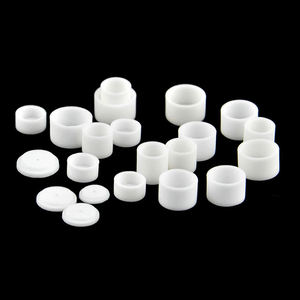
(Pyrolytic Boron Nitride PBN Crucibles for Growth of Bismuth Selenide Topological Insulator Crystals)
Researchers found that PBN crucibles offer excellent thermal stability and chemical inertness at high temperatures. This makes them ideal for containing molten bismuth and selenium without introducing impurities. The smooth inner surface of PBN also helps control crystal growth more precisely. Early tests show that crystals grown in PBN crucibles have higher structural integrity and consistent electronic properties.
The use of PBN crucibles reduces unwanted interactions between the melt and container walls. This leads to cleaner crystal formation and improved reproducibility in lab settings. Scientists noted that even small changes in crucible material can greatly affect the final crystal quality. Switching to PBN has already helped several research groups achieve better results in shorter timeframes.
Manufacturers of specialty lab equipment are now increasing production of PBN crucibles to meet rising demand. These components are made through a vapor deposition process that creates a dense, layered structure resistant to thermal shock. Their reliability in extreme conditions makes them suitable not just for bismuth selenide but for other sensitive crystal growth applications too.
(Pyrolytic Boron Nitride PBN Crucibles for Growth of Bismuth Selenide Topological Insulator Crystals)
This advancement supports faster progress in topological insulator research. It also opens doors for scaling up production of high-performance quantum materials. Labs working on novel electronic devices are already adopting this approach to improve their experimental outcomes.